
LED vs Conventional High-Bay Lighting: A Cost and Performance Comparison for Warehouses
September 8, 2026 · Hikari Penta Sarana
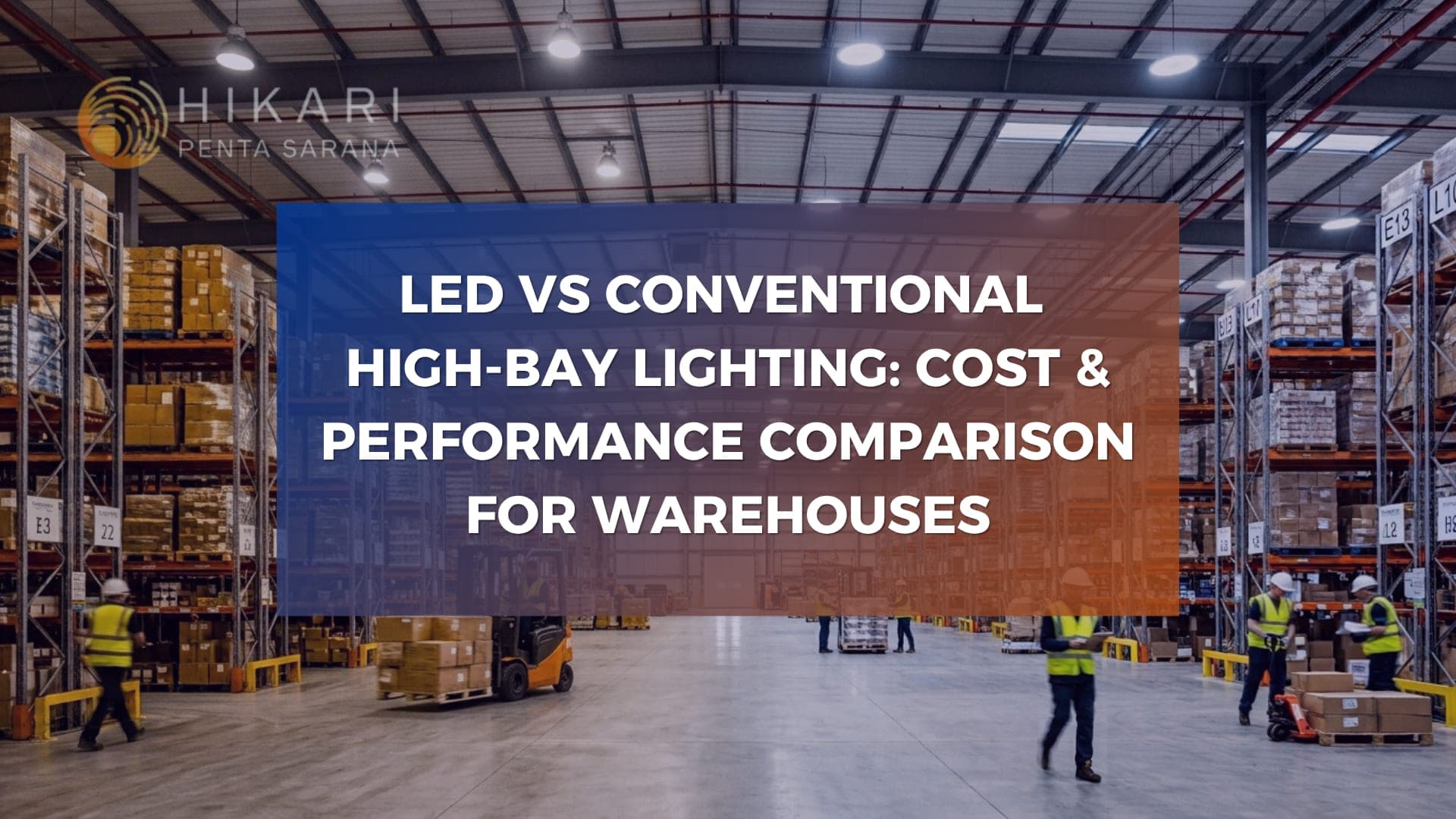
LED High-Bay Lighting vs. Metal Halide: When Should You Retrofit?
Many warehouses and manufacturing facilities still rely on older high-bay lighting systems, such as metal halide or fluorescent fixtures. While these lights may have worked well for years, they can become more costly to operate and maintain as they get older.
So, when should a facility consider switching to LED high-bay lighting? The answer isn't simply about replacing old lights with new ones. It comes down to evaluating energy consumption, lighting performance, maintenance requirements, and total cost over time.
For facilities with high ceilings, long operating hours, and difficult-to-access fixtures, an LED high-bay lighting retrofit can be a practical way to improve lighting performance while reducing long-term operating and maintenance costs.
Upfront Cost vs. Lifetime Cost
One of the most common concerns about switching to LED is the higher upfront cost. LED fixtures can cost more per unit than conventional metal halide fixtures, but the initial purchase price does not tell the whole story.
Metal halide fixtures typically draw around 250–400W, while a properly selected 100–150W LED high-bay fixture can often match or exceed the light output required for the same application.
Metal halide lamps also degrade significantly faster. They can lose 30% or more of their light output well before reaching their rated lamp life. This means that the actual lighting performance of an aging system may be considerably lower than when the fixtures were first installed.
When evaluating a warehouse lighting retrofit, it is therefore more useful to consider total cost of ownership rather than fixture price alone. Energy consumption, replacement lamps, maintenance labor, access equipment, and downtime can all contribute to the lifetime cost of conventional lighting.
Over a five-year period, these operating and maintenance costs can make LED high-bay lighting significantly more economical. Depending on operating hours, electricity rates, existing fixture wattage, and retrofit costs, the initial investment can frequently pay back within 18–30 months.
Light Quality and Uniformity
Energy efficiency is only one consideration when comparing LED vs. metal halide lighting. Light quality and consistency can also have a significant impact on warehouse and manufacturing environments.
Metal halide lamps can take several minutes to reach full brightness after being switched on. They can also require additional time to restrike after a power interruption. For facilities operating continuously or across multiple shifts, this delay can create an operational issue following a power outage.
LED high-bay fixtures, by comparison, can reach full output almost instantly. This makes them well suited to facilities where reliable and immediate illumination is important.
LED fixtures can also maintain color temperature and light output more consistently throughout their service life. As metal halide lamps age, they can gradually yellow and lose light output. Over time, this can create inconsistent lighting across a warehouse, with different areas appearing noticeably brighter, darker, or different in color depending on when individual lamps were last replaced.
A properly designed industrial LED lighting system can provide more consistent illumination across work areas, aisles, storage zones, and production spaces.
Maintenance and Lifespan
Maintenance is another important factor when considering an LED high-bay lighting retrofit.
A typical metal halide lamp can have a rated life of approximately 10,000–15,000 hours before replacement is required. In a high-bay application, replacing these lamps is rarely a simple task. Maintenance personnel may need to work at considerable heights and use a scissor lift or other access equipment to reach the fixture.
Quality industrial LED fixtures are commonly rated for 50,000–100,000 hours. For facilities operating two shifts per day, this can significantly reduce the frequency of lighting maintenance and replacement.
For warehouses and manufacturing facilities with high ceilings, difficult access, or large numbers of fixtures, reducing maintenance interventions can be one of the strongest reasons to consider switching to LED.
Fewer lamp replacements can also mean less maintenance labor, fewer lift requirements, and less disruption to normal facility operations.
Heat and Safety
Traditional metal halide fixtures operate at high temperatures, both at the lamp and ballast. In already-warm industrial environments, the heat generated by lighting can contribute to the overall heat load of the facility.
High operating temperatures can also create additional safety considerations during maintenance, particularly when personnel need to access recently operated fixtures.
LED fixtures generally operate at substantially lower temperatures than metal halide systems. This can help reduce heat contribution from the lighting system and may also reduce cooling requirements in conditioned spaces.
For facilities where maintenance personnel regularly work at height, reducing the frequency of fixture servicing can provide an additional operational and safety benefit.
Making the Switch: What to Expect from an LED Retrofit
Switching to LED does not necessarily mean replacing every existing fixture with a one-for-one LED equivalent.
LED fixtures distribute light differently from traditional metal halide fixtures. Because of this, a proper high-bay lighting retrofit should begin with a photometric calculation, similar to the process used when designing lighting for a new facility.
The calculation can help determine the appropriate fixture type, quantity, spacing, mounting height, beam angle, and light distribution required to achieve the target illuminance for the space.
This is important because simply replacing existing fixtures one-for-one may reproduce the limitations of the current lighting layout, including areas with insufficient illumination, excessive illumination, or uneven light distribution.
A properly planned LED warehouse lighting retrofit should instead evaluate the actual requirements of the facility and optimize the lighting system around its operating conditions.
When Is the Right Time to Switch to LED?
There is no single answer that applies to every warehouse or manufacturing facility. However, an LED retrofit is worth evaluating when an existing lighting system is consuming significant energy, requiring frequent lamp replacement, producing inconsistent illumination, or becoming increasingly difficult and expensive to maintain.
The business case becomes even stronger for facilities with long operating hours, high ceilings, large numbers of fixtures, or expensive access requirements for maintenance.
Rather than looking only at the purchase price of new fixtures, facility owners and managers should compare the total cost of ownership of the existing lighting system against the expected energy, maintenance, and operational costs of an LED solution.
Evaluate Your Warehouse Lighting Retrofit
If your facility is still running on metal halide or fluorescent high-bay fixtures, an LED retrofit may provide an opportunity to reduce energy consumption, maintenance requirements, and long-term operating costs while improving lighting consistency.
The most effective way to determine whether the investment makes sense is to evaluate the existing system based on actual operating hours, energy rates, fixture condition, required illuminance, maintenance requirements, and the proposed LED system.
Discuss your lighting requirements with Hikari Penta Sarana to explore an LED high-bay lighting retrofit for your facility, including a realistic payback estimate based on your actual operating hours and energy costs.