
How to Create a Lighting Connected System
August 28, 2026 · Hikari Penta Sarana
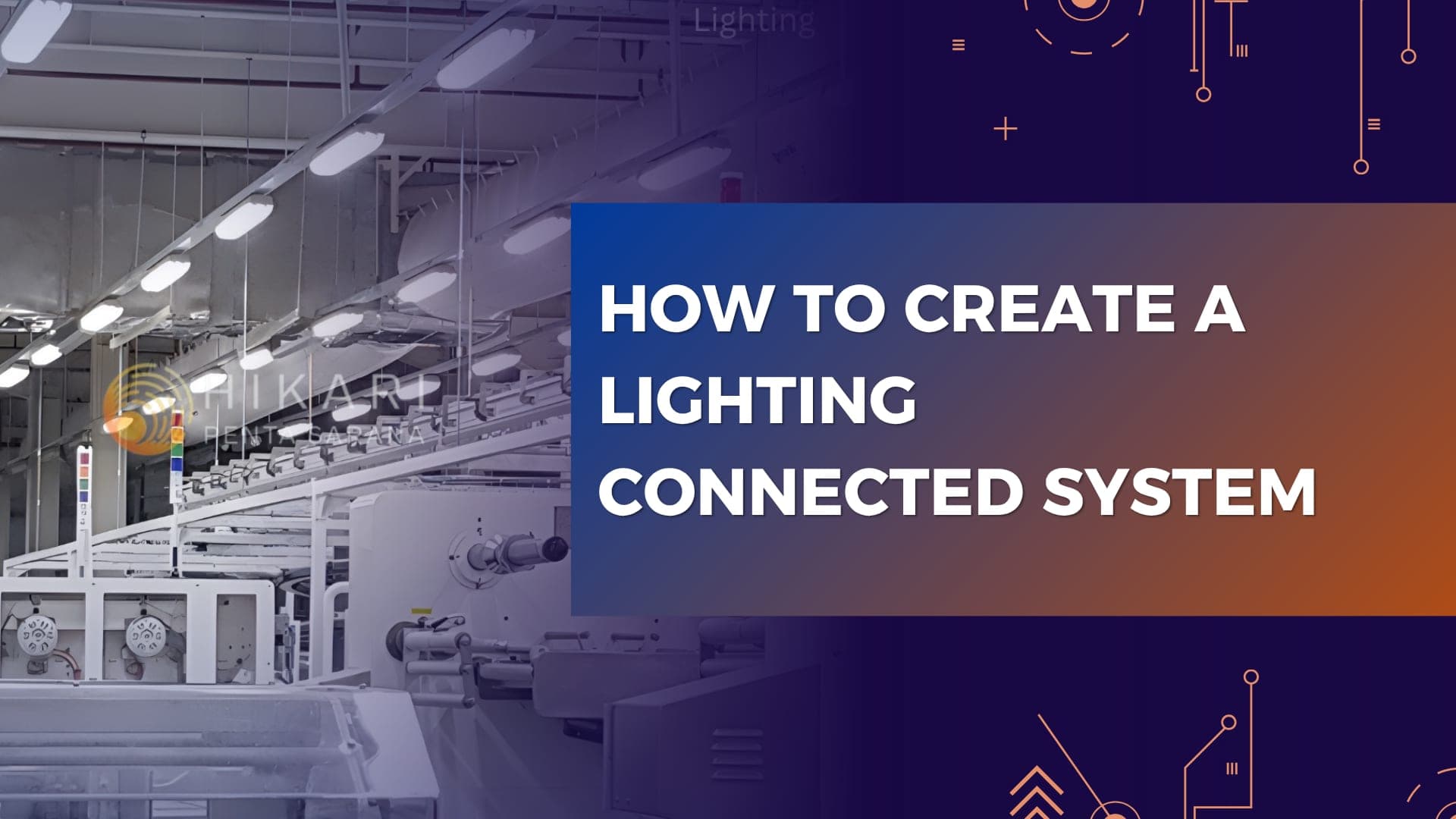
How to Create a Connected Lighting System
A modern lighting system can do more than illuminate a space. With connected lighting technology, luminaires, sensors, controls, and software can work together to help facilities monitor, automate, and optimize lighting performance.
For industrial facilities and data centers, connected lighting can provide greater control, support energy management, and simplify facility operations.
What Is a Connected Lighting System?
A connected lighting system connects lighting equipment through a network, allowing users to manage lighting as an integrated system rather than controlling each fixture individually.
- Control and schedule lighting remotely
- Automate lighting based on occupancy
- Adjust lighting levels through dimming
- Monitor lighting status
- Manage different lighting zones
- Integrate lighting with other building systems
Why Use Connected Lighting?
Connected lighting can provide several benefits for large and continuously operating facilities.
Better Control
Different areas can operate according to their actual use. Warehouses can respond to occupancy, offices can follow working hours, and outdoor lighting can operate on scheduled periods.
Energy Management
Occupancy sensors, scheduling, daylight response, and dimming can help reduce unnecessary lighting operation while maintaining appropriate lighting levels.
Centralized Monitoring
Facility teams can monitor lighting across multiple zones and identify potential issues more efficiently.
Smarter Facility Management
Connected lighting can integrate with broader building management systems, helping create a more coordinated approach to facility operation.
How to Create a Connected Lighting System
A successful connected lighting system starts with understanding the facility—not simply selecting smart luminaires.
1. Understand the Facility
Identify the building functions, operating hours, occupancy patterns, existing infrastructure, network availability, and control requirements.
2. Define Lighting Requirements
Consider illuminance, uniformity, glare, mounting height, luminaire distribution, environmental conditions, and operating hours. Connected controls should complement a properly designed lighting system.
3. Create Lighting Zones
Divide the facility into logical zones based on how each area is used.
Industrial: Production → Warehouse → Loading → Office → Parking
Data Center: Server Room → Technical Area → Corridor → Electrical Room → Support Area
4. Select the Right Technology
Depending on the project, the system may include connected LED luminaires, occupancy and daylight sensors, controllers, gateways, communication networks, and control software.
The technology should be selected based on the facility's scale, infrastructure, integration requirements, and future expansion.
5. Configure & Commission
After installation, configure zones, schedules, sensor responses, and control settings. The system should then be tested to ensure that lighting, sensors, communication, and integrations operate as intended.
Connected Lighting for Industrial & Data Center Facilities
Connected lighting can support a wide range of applications, including:
Industrial Facilities: Manufacturing plants, warehouses, logistics centers, loading areas, parking areas, and offices.
Data Centers: Server rooms, technical spaces, corridors, electrical rooms, maintenance areas, and support spaces.
For these environments, reliability, scalability, integration, maintenance, and cybersecurity should be considered from the design stage.
More Than Smart Lighting
A connected lighting system is more than a collection of smart lights. It combines:
Luminaires + Sensors + Controls + Communication + Software + Data
When properly designed, connected lighting can provide greater visibility and control while supporting energy management, operational efficiency, and smarter facility management.
Build Your Connected Lighting System with Hikari Penta Sarana
Hikari Penta Sarana provides lighting solutions for industrial and critical facility applications, from lighting selection and application considerations to connected control solutions.
Whether you are planning a data center, warehouse, logistics center, or industrial facility, the right connected lighting strategy can help create a more flexible and manageable lighting infrastructure.