
Data Center Lighting Design: Best Practices for Server Halls, Cold Aisles, and Hot Aisles
October 5, 2026 · Hikari Penta Sarana
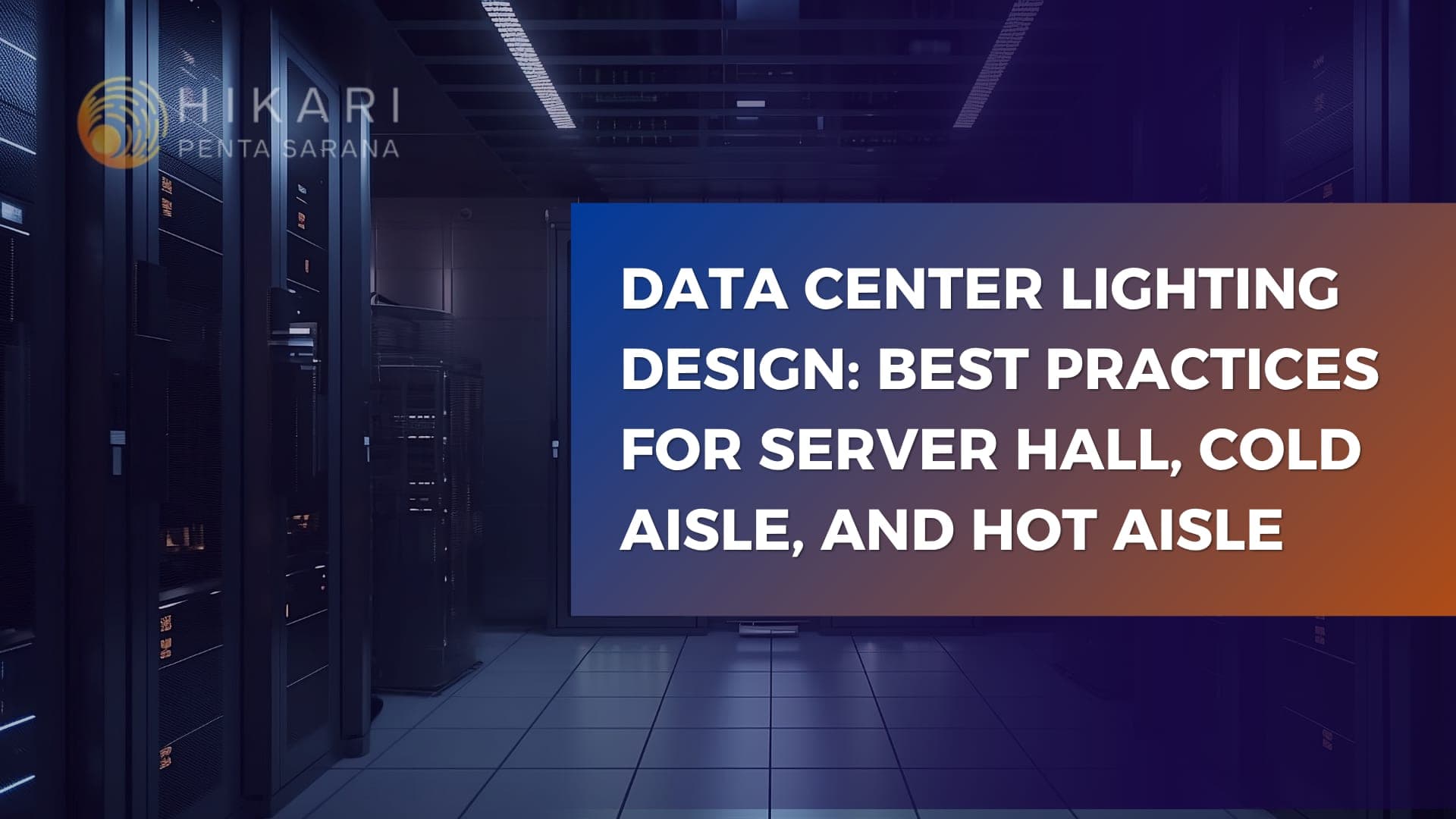
Data center lighting looks straightforward from the outside — rows of racks under rows of fixtures — but the design constraints are more specific than most commercial or even industrial spaces. Aisle containment, 24/7 operation, strict energy budgets, and the sheer density of infrastructure above and below the lighting plane all shape what a correct layout looks like.
Why Data Center Lighting Is Different
Unlike a warehouse, a data center's usable floor plan is dictated entirely by rack layout, and that layout is frequently reconfigured as capacity grows. Lighting needs to be planned around a rack and aisle grid that may shift, illuminate narrow aisles effectively without excessive spill into adjacent hot or cold containment, and hold up to continuous operation — data center lighting effectively never turns off in occupied zones, which puts a premium on fixture longevity and consistent output over years, not months.
Cold Aisle vs Hot Aisle Considerations
Cold aisles, where technicians spend the most time working at rack fronts, generally need higher and more even illuminance for cable management, labeling, and equipment servicing. Hot aisles are typically lower-traffic and can run at reduced illuminance or motion-triggered lighting, since sustained occupancy is rare and unnecessary light output there is pure energy waste working against the facility's cooling budget. Fixture placement also has to account for aisle containment curtains and doors, which change how light propagates down a row compared to an open floor plan.
Illuminance Levels for Server Halls
General circulation areas in a data center typically call for lower illuminance than the rack aisles themselves, while equipment rooms, electrical rooms, and mechanical spaces each have their own requirements based on the maintenance tasks performed there. Getting this zoning wrong in either direction has a cost — too little light in working aisles slows technicians and increases the risk of cabling or connection errors; too much light everywhere inflates both fixture count and the electrical load feeding it.
Lighting Controls and Zoning
Occupancy-based and motion-triggered controls are standard practice in modern data center design, since most aisles are unoccupied the overwhelming majority of the time. Properly zoned controls — tied to actual aisle geometry rather than a single blanket sensor per room — can meaningfully reduce lighting's contribution to overall facility power draw without compromising availability for the technician who does walk in.
If you're planning lighting for a new data hall or reconfiguring an existing one, we'd be glad to review your rack layout and MEP coordination requirements.