
Explosion-Proof Lighting: A Guide for Hazardous Industrial Areas
August 15, 2026 · Hikari Penta Sarana
What Makes an Area "Hazardous" for Electrical Equipment?
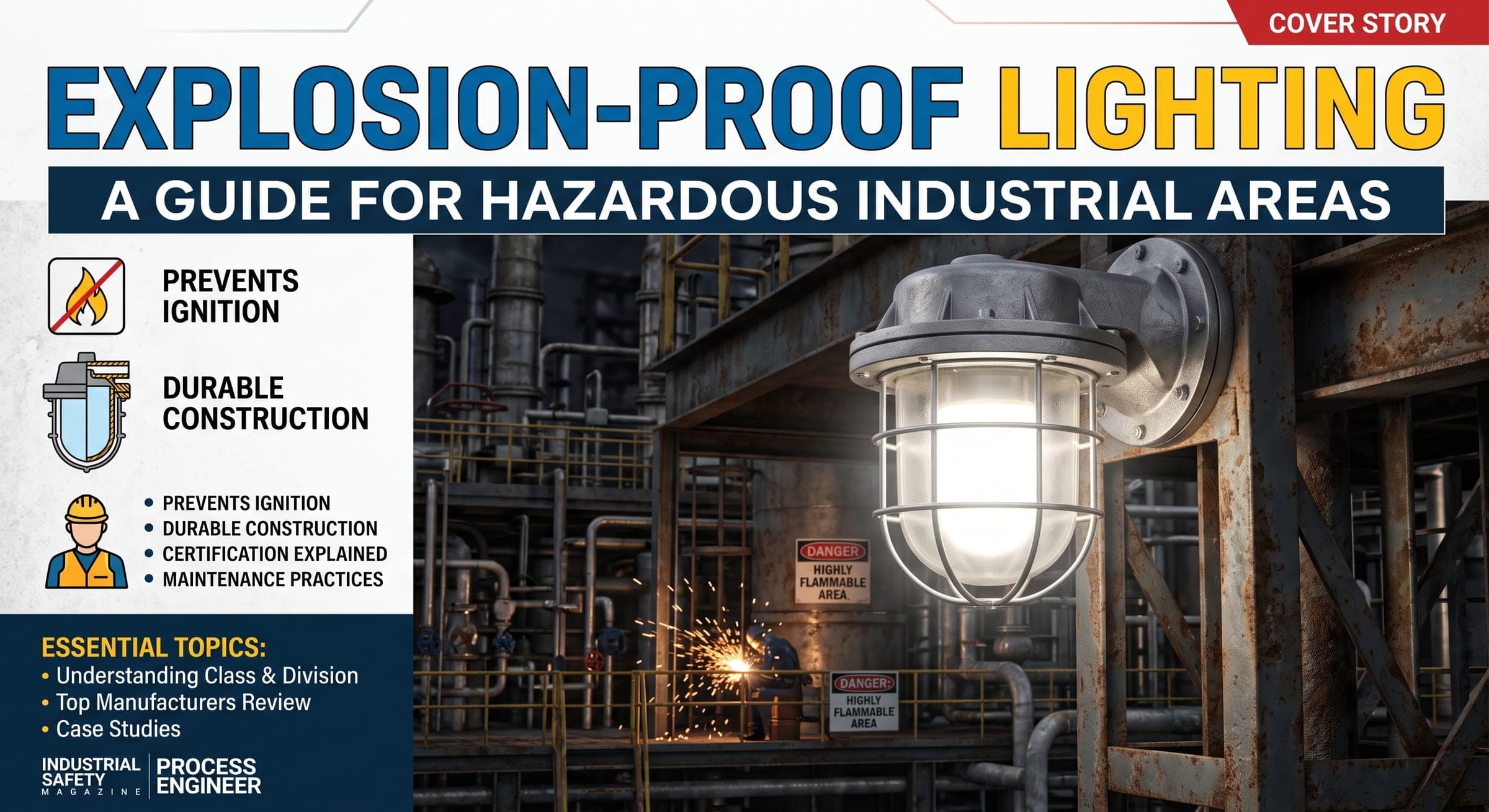
Not every industrial facility can use standard electrical fixtures. Oil and gas sites, chemical processing plants, and certain manufacturing environments handle flammable gases, vapors, or dust as part of normal operation. In these environments, a standard light fixture — one that sparks briefly during normal switching, or that can overheat under fault conditions — is a genuine ignition risk. This is where explosion-proof lighting becomes a requirement, not an upgrade.
How Explosion-Proof Fixtures Work
Explosion-proof electrical equipment is engineered to contain any internal spark or arc, preventing it from igniting the surrounding atmosphere — even if flammable gas or vapor is present. This isn't achieved by avoiding sparks entirely; it's achieved through certified enclosure design that contains an internal ignition event without it reaching the outside environment, combined with construction that limits surface temperature so the fixture itself can't act as an ignition source.
Certification for this kind of equipment isn't optional or self-assessed — it comes from recognized testing standards and must match the specific hazardous area classification of the site.
Where Explosion-Proof Lighting Is Typically Required
- Oil and gas processing and storage facilities
- Chemical and petrochemical plants
- Facilities handling flammable dust (grain processing, certain manufacturing)
- Fuel storage and distribution sites
Why the Right Manufacturer Partner Matters
Explosion-proof equipment is not a category where a facility can afford to work with uncertified or grey-market products. Hikari Penta Sarana partners with Cortem Group, a specialist manufacturer of explosion-proof electrical equipment, to deliver certified, compliant fixtures for hazardous-area applications — backed by genuine documentation and support, not just a product that looks the part.
Planning a Hazardous-Area Lighting Project
Hazardous-area lighting projects start with correctly identifying the area classification for each zone of the facility — this determines which certification category the fixtures need to meet. From there, our team handles fixture selection, supply, and installation, coordinated with your facility's safety and compliance requirements.
If your facility includes zones with flammable gas, vapor, or dust exposure, it's worth confirming your current lighting actually meets the certification your site requires — get in touch and our team can help assess it.