
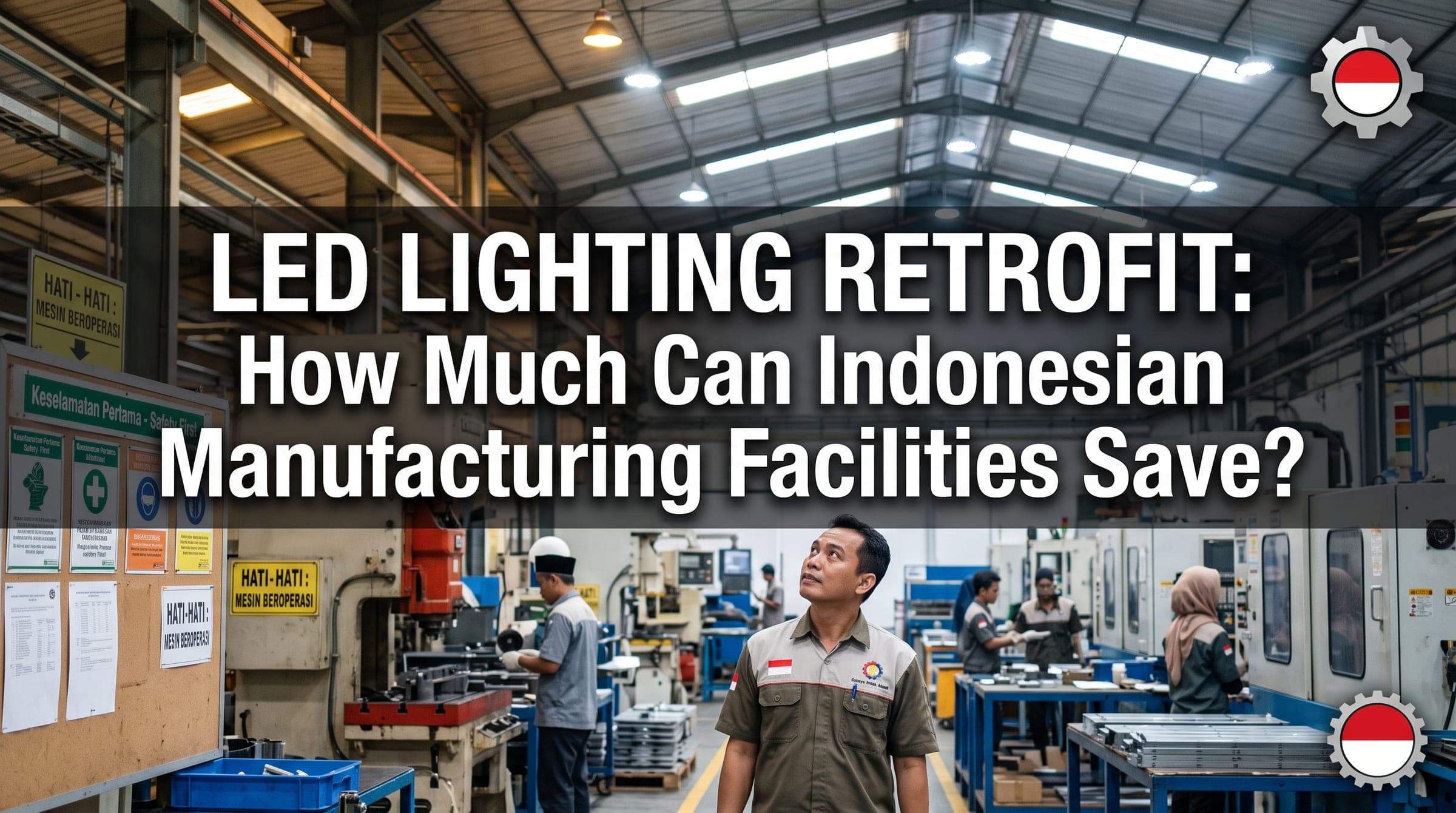
LED Lighting Retrofit: How Much Can Indonesian Manufacturing Facilities Save?
August 15, 2026 · Hikari Penta Sarana
Why Lighting Retrofits Matter for Manufacturing Facilities
For many manufacturing plants and warehouses across Indonesia, lighting is one of the largest and most overlooked line items in the electricity bill. Older fluorescent or metal-halide fixtures draw significantly more power than modern LED alternatives, and they typically require far more frequent maintenance and replacement. An LED lighting retrofit is often one of the fastest-paying-back upgrades a facility can make — without touching production equipment or requiring downtime beyond the installation window itself.
Where the Savings Actually Come From
1. Lower Energy Consumption
LED fixtures convert a much higher percentage of electricity into usable light rather than heat, compared to older lighting technologies. For high-bay warehouses and factory floors running lighting for long shifts or around the clock, that efficiency difference compounds into a substantial reduction in monthly electricity costs.
2. Reduced Maintenance and Replacement Costs
Traditional high-bay fixtures often need lamp replacements every year or two, and replacement in a high-bay setting usually means scheduling lift equipment and, in some cases, pausing nearby operations. LED fixtures rated for industrial use typically run for years longer between replacements, cutting both the material cost and the operational disruption of maintenance.
3. Smart Lighting Control Adds a Second Layer of Savings
Pairing an LED retrofit with smart lighting control — occupancy sensors, daylight harvesting near windows or skylights, and zoned scheduling — allows a facility to avoid lighting unused areas at full output. For large warehouses with variable occupancy throughout the day, this can meaningfully extend the savings beyond the fixture upgrade alone.
What a Retrofit Project Actually Involves
A well-planned energy-efficiency retrofit starts with an assessment of the existing fixtures, usage patterns, and facility layout — not just a like-for-like fixture swap. From there, we handle fixture selection, supply, and installation, with smart lighting control integration where it makes sense for the facility's operating hours and layout.
Is a Retrofit Worth It for Your Facility?
The right answer depends on your current fixtures, operating hours, and facility size — which is exactly what a proper assessment is for. If your factory, warehouse, or outdoor industrial area is still running on older lighting technology, it's worth having that conversation before your next major maintenance cycle rather than after it.