
Data Center Lighting Design: Key Requirements for 24/7 Facilities
August 15, 2026 · Hikari Penta Sarana
Why Data Center Lighting Is Different From Standard Industrial Lighting
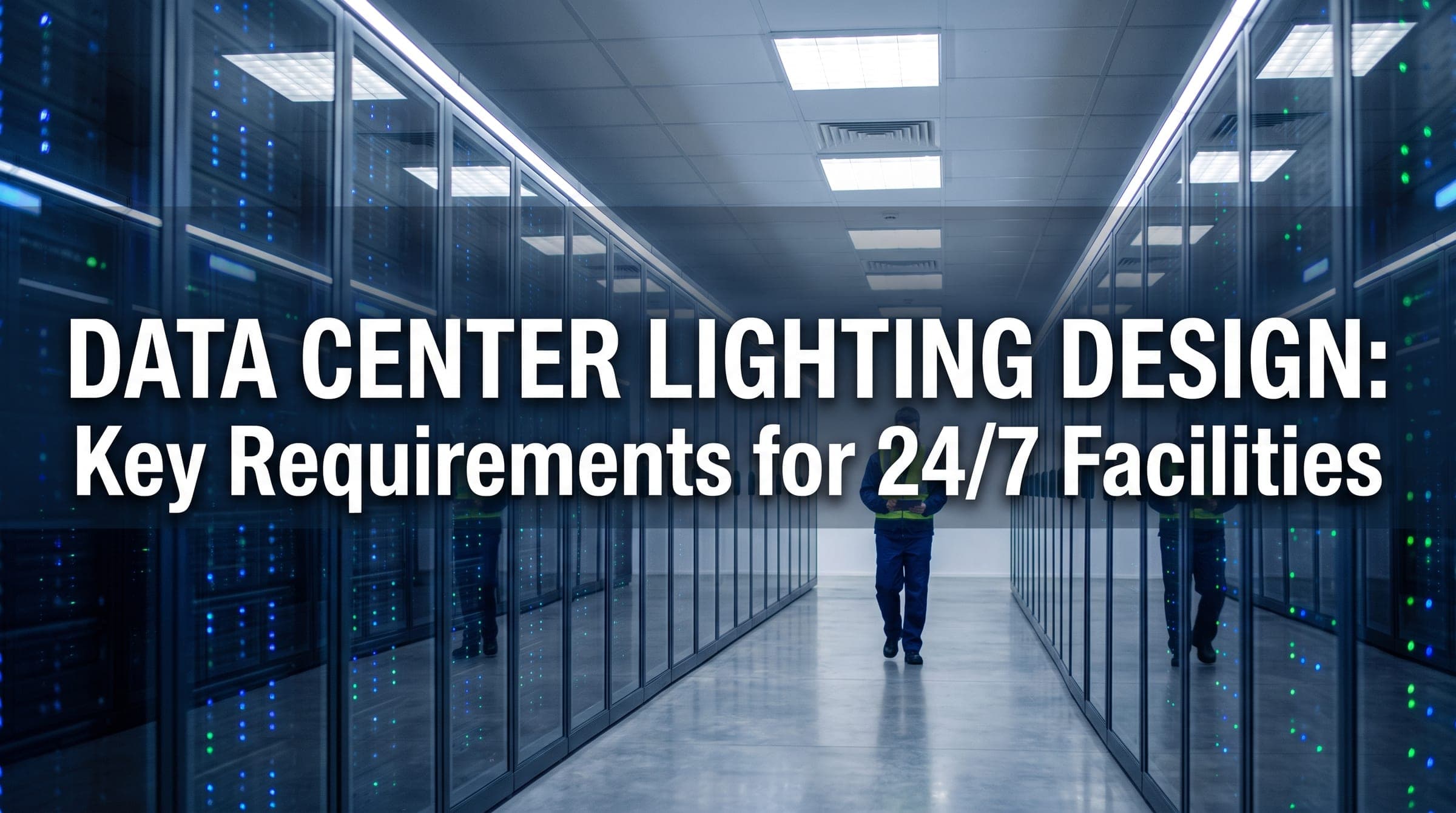
Data centers operate on a different set of rules than a typical warehouse or factory floor. Racks run 24 hours a day, seven days a week. Technicians need to identify cabling, read equipment labels, and spot warning indicators quickly — often while working around live electrical equipment. Lighting that works well enough for a general storage facility often falls short in a server hall, and the cost of getting it wrong isn't just inconvenience, it's operational risk.
At Hikari Penta Sarana, every data center lighting project starts with the same question: what does this specific facility actually need, based on real photometric calculation — not a generic layout copied from another site.
Key Requirements for Data Center Lighting Design
1. Consistent, Glare-Free Illuminance
Cold aisles, hot aisles, and maintenance walkways each call for different light levels. Uneven lighting creates shadowed zones where cable faults or overheating components are harder to spot. Proper photometric calculation maps out fixture placement and spacing so illuminance stays consistent across the whole room, not just directly under each fixture.
2. High-Efficacy LED Fixtures
Lighting runs continuously in most data centers, which makes fixture efficiency a direct line item in the facility's power budget. High-efficacy LED fixtures reduce electricity draw without cutting light output, and they generate less waste heat — a meaningful factor in a room where every watt of heat adds load to the cooling system.
3. Redundant Circuits and Reliability
A lighting failure during a maintenance window or an incident response is more than an inconvenience. Data center lighting circuits should be designed with redundancy in mind, so a single circuit fault doesn't leave technicians working in the dark in a critical area.
4. Smart Lighting Control
Not every aisle needs to be lit at full brightness around the clock. Occupancy-based smart lighting control can dim or switch off lighting in unoccupied zones, cutting energy use further without compromising visibility the moment someone enters the space.
Our Process
Every data center lighting project we deliver follows the same structure: professional lighting design and calculation first, then premium LED fixture selection matched to the facility's operational profile, followed by installation, and — where needed — smart lighting control integration. We also support long-term energy-efficiency retrofit programs for facilities upgrading older fixtures without a full lighting redesign.
Talk to Our Team
If you're planning a new data center build-out or evaluating your current facility's lighting for a retrofit, our team can walk through your specific requirements and put together a lighting design proposal based on your floor plan and operational needs.